|
...SIŁA I PIĘKNO MUZYKI TKWIĄ W JEJ RÓŻNORODNOŚCI..
..::OPIS::..
Hybryda Meshuggah i abstrakcyjnego fusion jazzu przypominającego interludia z późniejszych albumów Pestilence, polana pikantnym sosem Theory in Practice.
FA
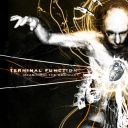
"Measuring the Abstract" is the debut full-length studio album by Swedish technical/ progressive extreme metal act Terminal Function. The album was released through Willowtip Records in November 2008.
The music on the album is technical/progressive extreme metal with some jazzy Holdsworthian soloing (the solos are very similar to the style of playing byFredrik Thordendal from Meshuggah). The playing is generally very technically challenging and the tracks are complex (while still featuring an accessible vers/chorus element). The vocals are mostly aggressive but there are some clean parts and a few vocoder vocal parts too. While the music is pre-dominantly aggressive with fast and complex distorted riffing there are also some jazzy acoustic breaks and the above mentioned jazzy soloing in the music. The kind of semi-jazzy playing I associate with Cynic. There´re also keyboards in the music but they are mostly used to create atmosphere. Other references in addition to Meshuggah and Cynic are acts such as Atheist, Textures and especially fellow Swede progressive tech/extreme metal act Theory in Practice (the "The Armageddon Theories (1999)" album). There are 8 tracks on the album but "Auroral Display" is a 1:04 minutes long instrumental so there are actually only 7 "real" compositions on the album. The total playing time on "Measuring the Abstract" is 43:27 minutes though which is a perfect length for this kind of music IMO. All compositions are of high quality and the album appears consistent with a great flow.
The musicianship is excellent. These are very skilled musicians. Fast and varied drumming, great aggressive vocals (the clean vocals are not the best but they are decent) and razor sharp and intense riffing. The jazz element in their sound is also executed to perfection and adds the spice to their sound.
The production is excellent even though I could have wished that the aggressive vocals were a bit less processed. They are a bit over the top at times.
"Measuring the Abstract" is an excellent album in the progressive tech/extreme metal genre and fans of the above mentioned acts should definitely take a listen to this high quality album. It´s not the most original album I´ve heard in the genre but it´s a minor flaw that doesn´t take away the overall good impression I´ve gotten of Terminal Function. I´m sure their next album will show them developing a more personal sound. The genre so rarely sees new quality acts appear but I think we can safely expect great things from Terminal Function in the future. For now this is a great introduction to this new act and "Measuring the Abstract" fully deserves a 4 star (80%) rating.
Umur
I thought for a while, sometime in the mid-90’s, that a perfect for the time metal album would be a fusion of technical death metal and Meshuggah’s sterile, cold mechanics; something like a mixture of the Swedes’ “Destroy, Erase, Improve” and Atheist’s “Unquestionable Presence”. The industrial and post-thrash movements had fully epitomized Meshuggah’s bleak, apocalyptic rifforamas by, say, 1996, and it was kind of time for the death metal fraternity to give them a shot as well. And then, literally like an answer to my hypothetical musical crossbreeding schemes, appeared these wizards Theory in Practice with their debut “Third Eye Function” (1997), also from Sweden. This effort, while deeply immersed in the technical death metal idea, suggested at more mathematical, robotic progressions not too alien to their already mentioned compatriots’ musical innovations.
However, Theory in Practice’s visions were aiming much higher than saturating their chosen field with “dubious”, not yet proven ingredients, and on subsequent works they developed into a marvellous, unique entity. Then Gorguts’ “Obscura” came a year later and changed the world of death metal entirely. After this opus incorporating djent and math elements into the genre wasn’t such an urgent agenda anymore as the level of the ultimate abstractism was already reached; death metal had spaced out beyond any tangible boundaries.
Back to the hybridization laboratory: in a case like this it’s very important for a band to achieve the perfect balance between the two sides; if there’s too much unmelodic chugga-chugga riffage, the less tolerant death metal fanbase would stop paying attention before long. If there’s too much hyper-fast technicality and sweeping Swedish death melodies, the math and djent audience will run away. One has to admit that to keep such different metal fractions happy with one offering is not the easiest task in the world, but it appeared that in 2008 these young enthusiasts, known as Terminal Function, have achieved it; believe it or not. And they were also from Sweden…
This band’s debut album “Measuring the Abstract” has a most tell-tale title: the guys have indeed been measuring the abstract additives to their musical palette very carefully thus producing the finest symbiosis of the two mentioned sides on the scene that is yet to be surpassed. Meshuggah’s polyrhythmic madness has received graceful technical death metal “baptism”, plus several precious fusion/jazz interactions as a bonus (think Cynic’s “Focus” and Pestilence’s “Spheres” for the latter). On top of that, these youngsters so nicely remind of their peers Theory in Practice who were already gone at the time; they weave very similar elaborate, schizoid riff-patterns without blasting to the extreme. And, another reference to that band’s debut may have been made with the band name…
In fact, speed doesn’t play an important role here at all; the moment the opening “Spawn” starts, the listener will quickly realize that this would be a different aural experience with the jarring dispassionate riffage and the beautiful oblivious melodies, this uncanny co-existence soon “visited” by serpentine technical moments which, albeit lasting till the end, tolerate all kinds of interruptions like fusion-esque “idylls”, dry mathematical “equations”, meditative balladisms, and sudden progressive sweeps ala later-period Death. “Room 101” inaugurates in the same jumpy fashion with djent ruling over the proceedings gradually pushed on the side by more melodic, also quite intricate, riff-formulas that grow into a cool dramatic build-up where fine clean vocals appear as opposed to the main gruff death metal ones; math and jazz “cross swords” later the “battle” won by a third party, technical death metal that is, which appears suddenly to sweep the scenery with a portion of dazzling dramatic pyrotechnics. “Dissolving Soul Fragments” “flirts” with the ballad for a start, but the choppy technicality is just around the corner marching for a bit before being absorbed by the next in line fusion-like break and the soulful clean vocals; astounding technical passages follow suit raising the flag of Theory in Practice sky high with their twisted, weird aura.
“The Brain-Shaped Mind” is a most hectic shredder at the beginning with even more puzzling decisions served towards the middle alongside fine melodic motifs akin to Death again; the guys start bending it like Meshuggah in the second half djent and fusion “creeping” together until ”meeting” the exiting technical stroke. “Tactile” is the long lost number from “Chaosphere”, a math masterpiece second to none which even Meshuggah would find really hard to produce nowadays; expect the obligatory fusion/jazzy breaks to interfere with death metal occupying a small niche towards the end. “Cloning Assembly” unleashes stunning technical “skirmishes”, and from this engaging moment onwards there’s no let up regardless of the several more melodic digressions, the stylish rifforama is never-ending here gradually subsiding till the silent finale. “Auroral Display” is 1-min of enigmatic operatic ambience, a “rude awakening” provided by the introductory guitars of the closer “Remote Views” which starts the drama with nerve-scratching shades of djent before the guys remind of their idols Theory in Practice again with exemplary technical riffing; the staple fusion-esque digression mid-way is nicely overwritten by more sweeps of standout technicality although the band’s penchant for sprawling progressive, “jazz vs. fusion” etudes takes the upper hand at the end.
Yes, you can have the best of both, even three if you like, worlds, and this carefully-plotted opus is a most assuring testimony for that. I actually thought that such a feat would be possible way earlier, and that Atheist or Pestilence would be the ones to look askance and embrace the polyrhythmic chugs in order to enrich their already pretty eccentric arsenal. Well, that never happened, and Theory in Practice left this process unfinished moving away from the last vogue in metal after their short “flirtation” with it on the debut. There were rumours circling around at the time that those sounds were contagious and addictive…
And those rumours were proven right; having already shown in a most evocative way how meticulously the guys prepare for every feat of theirs, they took a long 7-year break before emerging with their next album “Clockwork Sky”. I thought that they might produce something along the lines of Cynic’s “Traced in Air” having in mind their frequent staggerings towards the jazz/fusion arena on the debut. At the same time, the album-title was kind of pointing at another direction, one where there was no room for airy and spacey “non-sense”. And said title was an apt hint; it turned out that the polyrhythmic epidemic has completely overtaken all other ingredients erasing them from the band’s palette, and this new opus is more Meshuggah than Meshuggah’s own “The Violent Sleep of Reason” (2016); a setback in almost every department except for the diehard djent and math lovers who will nod in dispassionate approval at every chug and click, and those are amply provided all the way.
I think the death metal brotherhood should be put under quarantine since this mechanical “disease” continues spreading like hell having taken other “victims” like Wormed, Beyond the Gates, Sleep Terror, Vedonist, Sickening Horror, Decapitated, Gojira, even Morbid Angel if you like; the list can be by all means extended… If these acts want to do it right, without losing their death metal roots completely that is, I would suggest they give “Measuring the Abstract” a listen; there’s no better “recipe” for a delicious third-eye opening, “sterility in death” “dish”.
bayern
..::TRACK-LIST::..
1. Spawn 04:51
2. Room 101 06:55
3. Dissolving Soul Fragments 06:49
4. The Brain-Shaped Mind 06:48
5. Tactile 04:43
6. Cloning Assembly 06:42
7. Auroral Display 01:04
8. Remote Views 05:30
https://www.youtube.com/watch?v=100Cnt8xmG0
SEED 15:00-22:00.
POLECAM!!!
|